
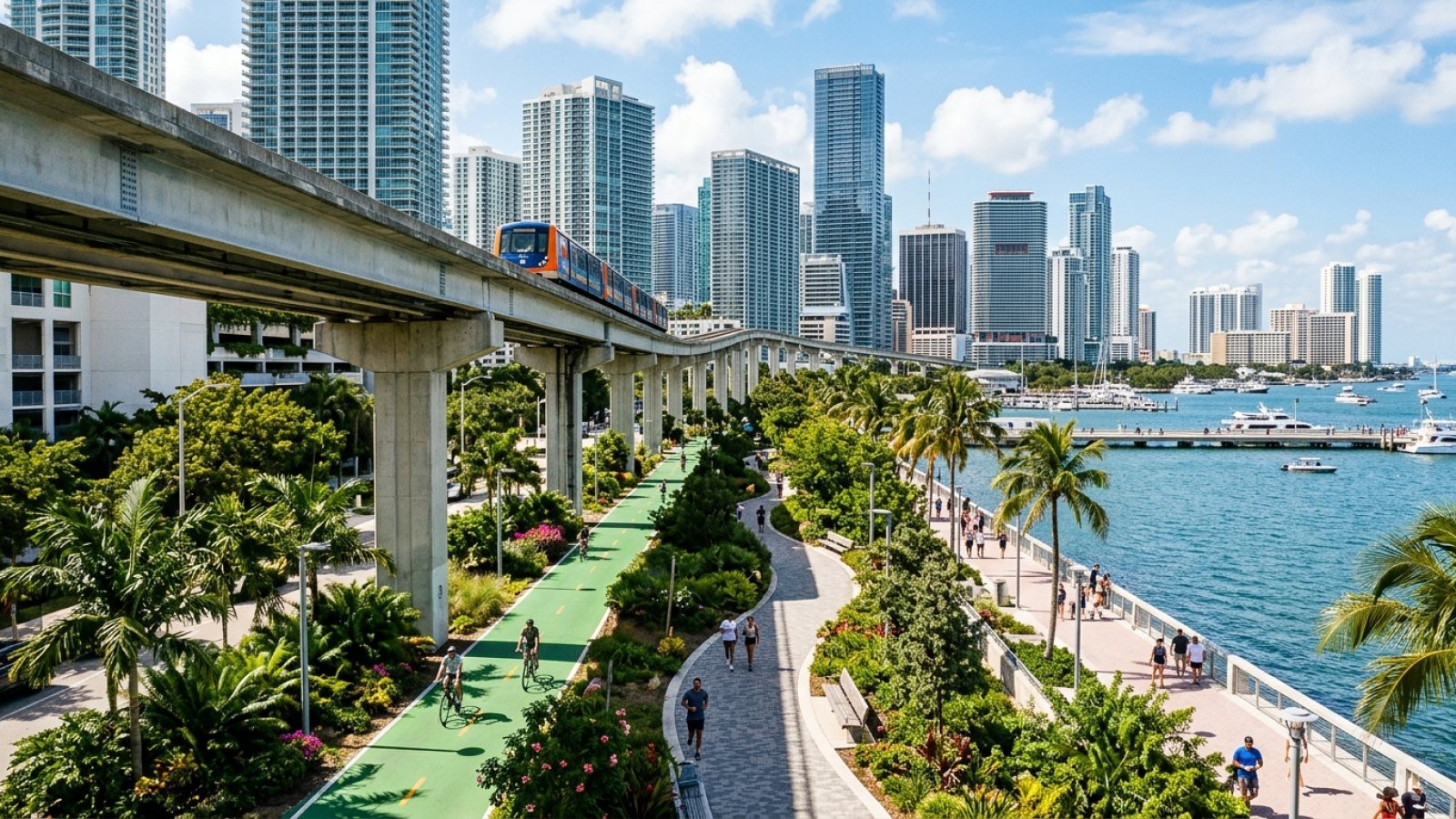
Miami's Green Arteries: The Underline and Baywalk Weave a More Connected Downtown
Downtown Miami is steadily becoming a more walkable and bikeable city, thanks to the ongoing development of its linear parks and waterfront pathways. The Underline and Baywalk are transforming how residents and visitors experience the urban core.
Downtown Miami is in the midst of a profound transformation, moving beyond its car-centric past to embrace a future where pedestrian and cyclist networks are integral to urban life. While large-scale developments continue to reshape the skyline, such as the recent news of a Gencom-led joint venture purchasing the landmark InterContinental hotel for $300 million in Downtown Miami, as reported by Commercial Observer, equally vital are the public infrastructure projects enhancing daily living for residents. Among the most significant are the ongoing evolution of The Underline and the continuous expansion of the Miami Baywalk, together weaving a new fabric of connectivity and recreation across the urban core.
These initiatives represent a crucial shift in urban planning, prioritizing green spaces and alternative transportation. They are not merely amenities but foundational elements for a healthier, more sustainable, and community-oriented downtown. As construction cranes dot the horizon and major infrastructure milestones are reached, like the recent project milestone of a new westbound I-395 ramp to I-95, noted by Miami Today, the focus on enhancing public spaces for residents remains paramount.
A New Network for Active Living
The vision for a truly walkable and bikeable downtown is steadily materializing through these dedicated pathways. The Underline, a linear park and urban trail beneath Miami's elevated Metrorail, is perhaps the most ambitious. Converting the ten-mile corridor from the Miami River to Dadeland South, it is designed to be a vibrant public space, offering everything from open-air gyms and performance areas to dedicated cycling and walking paths. Its development is not just about transportation; it's about reclaiming underutilized urban space and converting it into a dynamic community asset.
Sections of The Underline, such as the popular Brickell Backyard, are already bustling with activity, demonstrating the demand for such spaces. This initial phase provides a glimpse into the broader potential of the project, which will ultimately connect diverse neighborhoods, cultural institutions, and employment centers. The thoughtful integration of landscaping, public art, and seating areas encourages users to linger, fostering a sense of place and community interaction that was previously missing beneath the elevated tracks.
The Underline: A Linear Park for the Modern City
The design philosophy behind The Underline emphasizes both functionality and aesthetics. Each segment is envisioned to have unique characteristics while maintaining a cohesive identity as a continuous linear park. This deliberate planning aims to create a diverse user experience, catering to cyclists seeking a continuous route, pedestrians enjoying a leisurely stroll, and families looking for safe recreational areas. The project also plays a significant role in improving urban ecology, with native plantings designed to enhance biodiversity and absorb stormwater runoff, contributing to the city's resilience efforts.
As new sections open, the impact on surrounding neighborhoods, from Brickell to the Arts & Entertainment District, becomes increasingly apparent. These green arteries provide a much-needed respite from the urban density, offering shaded pathways and inviting spaces that encourage outdoor activity year-round. They serve as vital corridors, making it easier and more pleasant for residents to commute to work, access local businesses, or simply enjoy the unique environment of downtown Miami without relying on a car.
The Baywalk: A Scenic Promenade Along the Waterfront
Complementing The Underline's inland progression is the ongoing development of the Miami Baywalk. This ambitious project aims to create a continuous, uninterrupted promenade along the entire bayfront, connecting residential towers, commercial districts, and beloved public parks. From Edgewater to Brickell Key and beyond, the Baywalk offers unparalleled views of Biscayne Bay, providing a scenic backdrop for walkers, joggers, and cyclists. Its segments, some of which have existed for decades, are steadily being linked to form a seamless coastal path.
The Baywalk is more than just a path; it is Miami's connection to its most defining natural feature – the bay. It allows residents and visitors to experience the waterfront firsthand, activating spaces that were once inaccessible or fragmented. Community initiatives, such as the Coconut Grove Arts Festival funding Shake-A-Leg Miami sails, reported by Hoodline, highlight the importance of the bayfront as a hub for activity and charitable support, reinforcing the need for accessible public access points like the Baywalk.
Weaving a Connected Urban Fabric
Together, The Underline and the Baywalk represent a synergistic approach to urban development. They are creating a comprehensive network that links key areas of the urban core, fostering a sense of cohesion and encouraging active transportation. This integrated system is crucial as downtown Miami continues its growth trajectory, often referred to as 'Manhattanization.' Providing dedicated, safe, and attractive routes for pedestrians and cyclists helps mitigate traffic congestion, promotes public health, and enhances the overall quality of life.
The continued progress on these public spaces demonstrates a commitment to building a more livable and connected city. As residents increasingly prioritize health, well-being, and sustainable living, these green arteries will become even more indispensable. The future of downtown Miami is not just in its towering buildings, but in the vibrant, accessible, and green spaces that connect them all, inviting everyone to explore the city on foot or by bike.
