
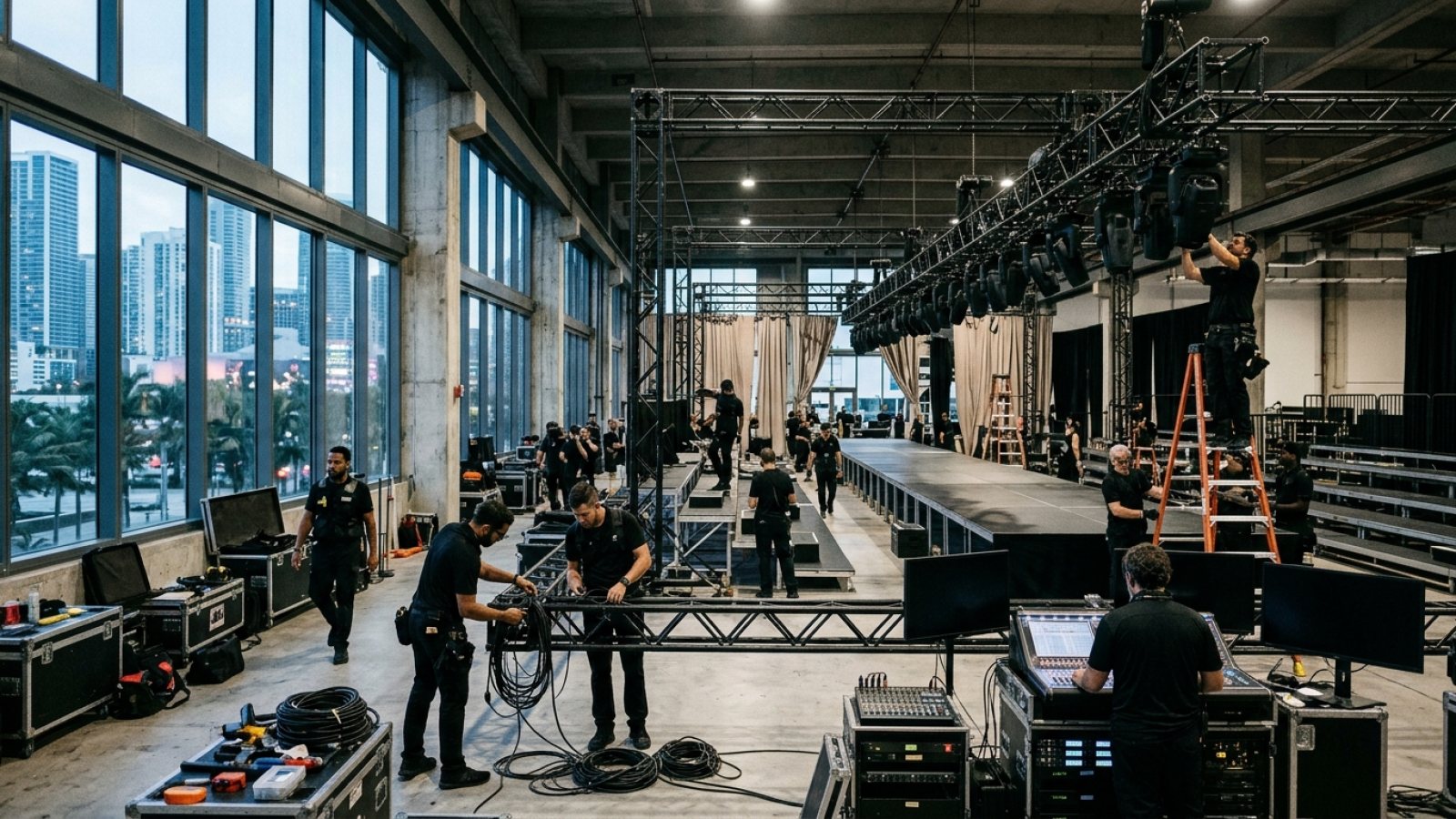
Unveiling the Hidden Work: How Miami Fashion Shows and Brand Events Take Shape
Behind the glamorous facades of Miami's high-profile fashion shows and brand activations lies a complex, meticulously coordinated ecosystem of professionals. These intricate productions showcase the city's growing capacity for world-class event execution, driven by local and international talent.
Miami's reputation as a global hub for luxury, design, and vibrant culture is amplified by its impressive roster of fashion shows and brand events, which annually draw international attention. What onlookers often see is the polished final product: models gliding down a runway, innovative product displays, or engaging interactive experiences. However, the sophisticated orchestration required to bring these moments to life is a massive undertaking, involving hundreds of dedicated professionals working behind the scenes across downtown Miami's diverse venues.
From Concept to Catwalk: The Producers and Planners
Every major fashion show or brand activation begins with a vision, often months in advance. Event producers are the architects of this vision, responsible for transforming abstract ideas into concrete plans. Their work encompasses everything from budget management and timeline creation to securing permits and ensuring regulatory compliance. A critical early step involves scouting locations, with downtown Miami offering a dynamic array of options—from the grand ballrooms of Brickell's luxury hotels and the open spaces of the Arts & Entertainment District to the blank canvas potential of renovated warehouses or the iconic backdrops of the bayfront. Producers work closely with creative directors who define the aesthetic, mood, and overall narrative of the event, coordinating everything from the color palette to the flow of the guest experience. This foundational planning ensures every element, from the invitation design to the post-event breakdown, is meticulously considered.
The Technical Ballet: Staging, Lighting, and Sound
Once a venue is selected and the creative vision is set, an army of technical specialists moves in. Staging companies erect intricate sets, build runways, and construct custom backdrops that often demand engineering precision. Lighting designers craft atmospheres ranging from dramatic spotlights to ambient glows, using complex DMX systems to synchronize thousands of individual lights with the event's rhythm. Sound engineers calibrate audio systems for live music performances, DJ sets, or even subtle atmospheric effects, ensuring crystal-clear acoustics whether for a bustling press junket or a hushed runway reveal. Beyond the main show, ancillary elements like video projection mapping, interactive digital displays, and live streaming setups require a deep bench of AV technicians. The seamless integration of these technical components is paramount, often requiring extensive rehearsals and contingency planning to adapt to the unique characteristics of downtown spaces, some of which present unique logistical challenges or opportunities.
The Human Touch: Talent and Coordination
While technology sets the stage, human talent fills it. Model casting agents meticulously select individuals who embody the brand's aesthetic, often coordinating schedules for dozens of models across multiple shows. Backstage, a whirlwind of activity unfolds, spearheaded by styling teams, hair artists, and makeup professionals. These highly skilled individuals work under immense time pressure, transforming models and presenters in minutes, sometimes seconds. Dressers are crucial, ensuring garments are perfectly fitted and accessories are precisely placed, orchestrating swift changes between looks. Beyond the on-stage talent, a vast network of hospitality staff, security personnel, public relations teams, and photographers work in concert to manage guests, ensure safety, capture content, and amplify the event's reach. The collaborative spirit among these diverse groups, often representing local businesses and independent contractors, is essential for pulling off events of this scale and sophistication.
Miami's Evolving Event Landscape
The intricate coordination required for fashion shows and brand events underscores Miami's maturing infrastructure and specialized talent pool. These productions are not merely spectacles; they are significant economic drivers, stimulating local economies through direct employment for crews, venue rentals, catering services, transportation, and equipment suppliers. As downtown Miami continues to grow and evolve, offering new architectural landmarks and adaptable spaces, the city's capacity to host increasingly ambitious and technologically advanced events only expands. The behind-the-scenes effort ensures that when the lights come up and the cameras roll, Miami is not just presenting a show, but a testament to its organizational prowess and creative dynamism, establishing a new standard for urban event production.
