
From Groundbreaking to Skyline: Tracing Downtown Miami's New Towers
The ever-changing skyline of downtown Miami is a testament to meticulous planning and dedicated execution. From initial concepts to the final topping out, each new tower represents a significant journey in urban transformation.
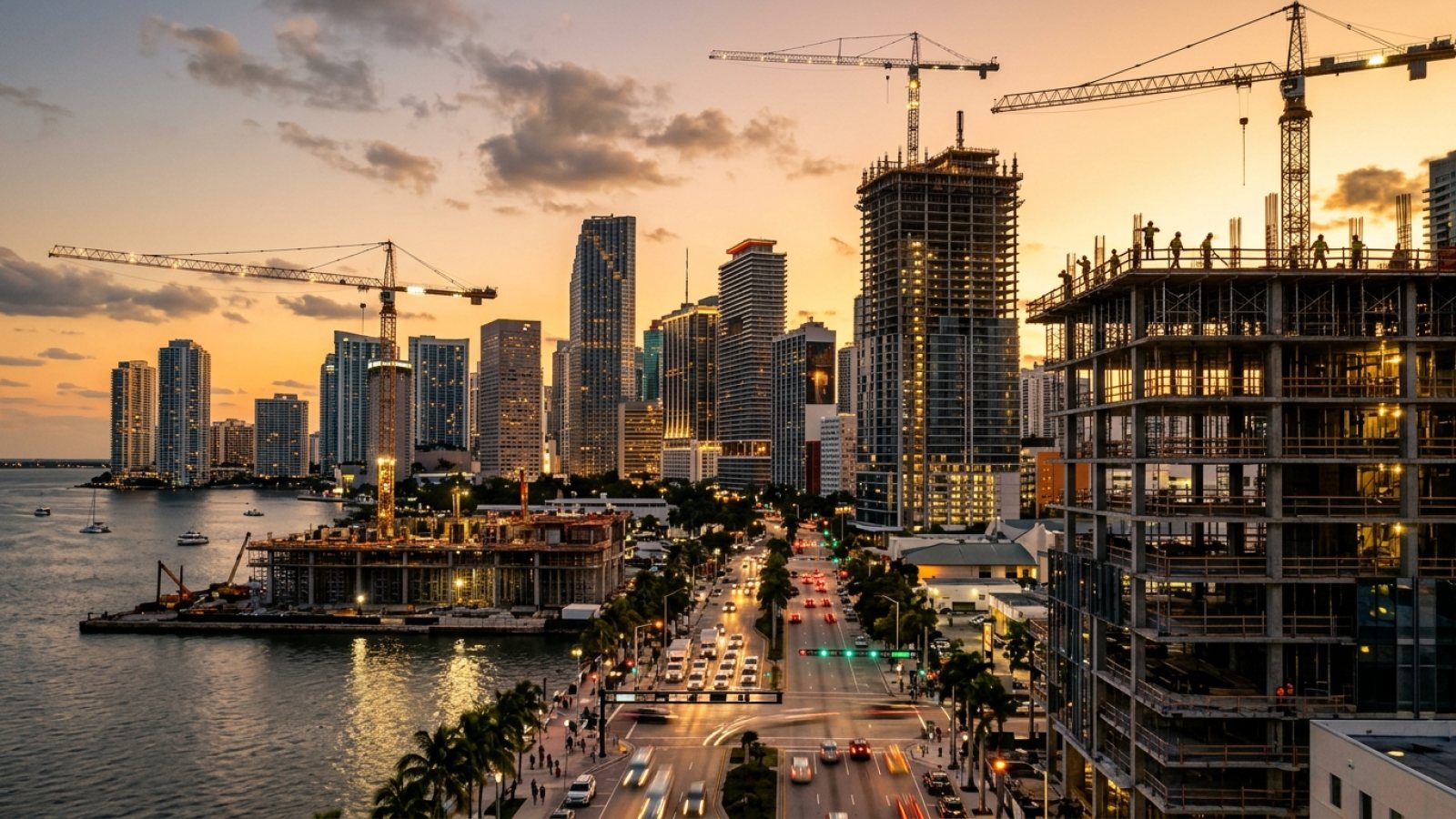
The sight of towering cranes against the Miami skyline has become a quintessential symbol of downtown's relentless transformation. These metallic giants are the most visible indicators of a complex, multi-stage process that brings new residential, commercial, and mixed-use spaces to life, shaping the urban core for decades to come. Each new building, from its nascent concept to the dramatic “topping out” ceremony, marks a significant chapter in our city's ongoing growth, reflecting both ambitious vision and painstaking execution.
From Vision to Blueprint: The Planning and Approval Gauntlet
Before a single shovel can break ground, a new tower embarks on a journey through intricate planning and rigorous regulatory review. This initial phase often begins with the strategic acquisition of prime real estate, as seen with the recent report that the Meruelo family’s Edgewater development site hits market for $150M. Such transactions underscore the high stakes and significant investment required to secure the footprint for future developments. Once land is secured, developers engage architects to craft designs that not only meet market demand but also contribute to the city's aesthetic and functional landscape. This stage involves intense scrutiny from local planning bodies, where proposals are evaluated for their architectural merit and urban impact. For example, a recent report from The Real Deal highlighted how the Miami board called Namdar’s towers “very vanilla,” while gushing over Cain-Kushner and Breitling projects, illustrating the subjective yet critical design assessments projects undergo. Similarly, a Hoodline report detailed an Edgewater Miami 43-Story Tower Review at 720 NE 27th St, indicating the ongoing public and regulatory oversight that ensures new constructions align with city standards and resident expectations. Securing the necessary permits is a monumental hurdle, requiring extensive documentation, environmental impact studies, and community engagement. Simultaneously, the financial architecture for these megaprojects must be meticulously constructed. This week alone, Dealroom reported that Romania's One United backs Miami's ORA tower with $43M, while Markets of Tomorrow announced Breitling unveils its first-ever branded condo tower in Brickell, both pointing to the crucial role of investment and branding in bringing these ambitious visions to fruition. This groundwork, though less visible than the rising steel, is arguably the most critical foundation for any successful development.
The Ascent: Groundbreaking to Topping Out
With approvals in hand and financing secured, the tangible transformation begins. The symbolic act of breaking ground, like the recent report from megaproject.com announcing Faena Residences Miami Breaks Ground on US$817 Million Twin-Tower Development, marks the official start of vertical construction. This is when the cranes, the true workhorses of downtown Miami, appear. These towering structures become temporary fixtures, orchestrating the ballet of materials and manpower that defines the modern construction site. Day by day, floor by floor, the building ascends, its skeleton gradually filling in with concrete and glass. The process is a testament to engineering prowess and coordinated labor, transforming blueprints into physical reality. Reports from Haute Living and Haute Living, outlining Downtown Miami’s and Edgewater's new towers by delivery year, offer a glimpse into the sheer volume of projects currently in this active construction phase, reshaping our skyline at an unprecedented pace. The “topping out” ceremony is a significant milestone in this journey, signifying that the highest structural point of the building has been reached. It’s a moment of celebration for the construction teams and a clear signal to the community that another landmark is nearing completion, poised to welcome its first residents or tenants. This phase, characterized by the constant hum of machinery and the steady rise of new structures, visibly demonstrates the relentless dynamism of Miami’s urban core.
Beyond the Facade: Integrating Growth into the Urban Fabric
The impact of these rising towers extends far beyond their individual footprints; they are integral to the broader evolution of downtown Miami. As our skyline grows denser, the importance of complementary infrastructure and a vibrant community fabric becomes even more pronounced. The city is not just building upwards, but also enhancing the connective tissues that make urban living enjoyable and efficient. A prime example is the recent report by NBC 6 South Florida on Miami's new pedestrian and bike corridor, linking Brickell to Dadeland without a car. Such initiatives improve walkability and accessibility, directly benefiting the residents and workers of these new towers. Moreover, a thriving downtown is defined by its cultural and recreational offerings. Even as cranes reshape the horizon, the pulse of the city remains strong through events that draw people into the urban core. stupidDOPE noted that Vice City Takes Over the Nightlife for GTA VI Week, from November 20–26, highlighting the magnetic draw of downtown's entertainment scene. Looking ahead, The Miami Guide has already unveiled the first wave of programming for Winter Music Conference 2027, demonstrating the continuous commitment to fostering a dynamic cultural landscape. These elements – robust infrastructure and a rich event calendar – are crucial for transforming a collection of impressive buildings into a truly livable and desirable downtown. The new towers are not isolated monoliths, but rather vital components of an increasingly sophisticated and interconnected urban ecosystem, where work, life, and leisure converge.
The journey from a conceptual permit to a fully topped-out tower is a complex, multi-faceted endeavor that defines downtown Miami's energetic expansion. It is a process that requires foresight, massive investment, diligent execution, and a commitment to integrating new structures into a cohesive urban environment. As more cranes continue to punctuate our skies, they serve as powerful reminders of Miami's ambitious future, a future being built one magnificent structure at a time, enhancing the core for all who live, work, and visit here.
