Downtown Miami's Integrated Transit: A Catalyst for Business and Urban Growth
Downtown Miami's unique public transit network, comprising Brightline, Metromover, and Metrorail, is increasingly vital to the area’s economic and social fabric. This interconnected system is not just moving people, but actively shaping the landscape of the urban core, influencing everything from large-scale development to major public events.
Downtown Miami’s unique public transit network—Brightline, Metromover, and Metrorail—is rapidly proving its critical role in the urban core’s dynamic growth. This integrated system of elevated rails and inter-city connections is more than just a convenience; it’s a foundational element influencing the wave of development, fostering economic activity, and enhancing the area's appeal as a vibrant destination.
The Urban Core's Integrated Network
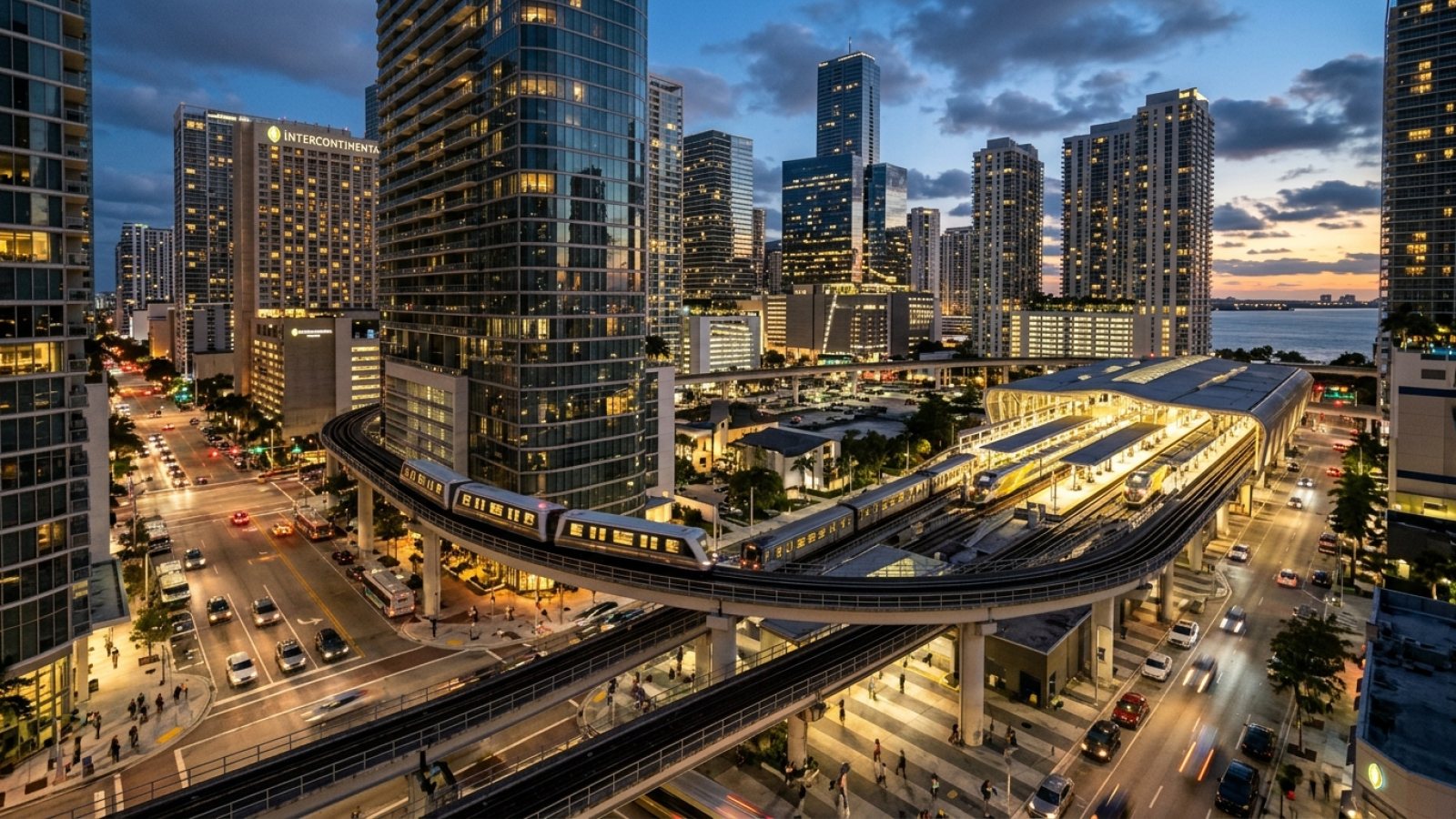
At the heart of downtown’s connectivity lies a multi-modal transit hub that seamlessly blends local and regional travel. The Metromover, Miami’s free, automated people mover, serves as the central circulatory system, efficiently connecting neighborhoods like Brickell, the Central Business District, and the Arts & Entertainment District. Its elevated loops provide vital access to key destinations, eliminating the need for private vehicles within the bustling core. Complementing this local service, Metrorail extends connections across Miami-Dade County, linking downtown to wider residential and commercial areas, and bringing residents and visitors into the city with ease.
Bridging the local with the regional is Brightline, the inter-city express train that has fundamentally reshaped travel between South Florida's major urban centers. Its flagship MiamiCentral station, situated strategically downtown, acts as a nexus where Metromover and Metrorail converge. This unique configuration allows commuters and travelers to arrive downtown from distant points via Brightline or Metrorail and then navigate the dense urban landscape effortlessly via Metromover, creating a powerful, interconnected transit experience that drives both daily commerce and large-scale development.
Fueling Development and Economic Activity
The accessibility provided by this transit triad is a major draw for developers and businesses. The ability to move people efficiently within and beyond the urban core makes high-density projects not only feasible but desirable. This week alone underscores the momentum: luxury condominiums have received an all-clear for a historic church site in Brickell, as reported by the Miami Herald, signaling continued high-end residential growth in transit-rich areas. Furthermore, the keysnews.com reports that the Villa Miami residential tower has topped out at 56 stories, adding significant residential density directly within the downtown orbit.
The ripple effect extends to adjacent neighborhoods, with The Real Deal noting top permits issued for Trilogy’s 247-unit project in Edgewater. This constant influx of new residents and businesses, attracted by downtown’s connectivity, contributes to an optimistic outlook for Miami projects, as seen in comments from Michael Stern, according to The Real Deal. Moreover, the conversation about areas like the Design District becoming the next office-market wave, with rents reaching $250 per square foot, as explored by The Real Deal, suggests that the robust economic energy of the transit-anchored core is expanding its influence across the region.
Connecting People to Downtown's Vibrancy
Beyond daily commutes and residential growth, the transit network plays a crucial role in positioning downtown as a premier destination for cultural events and leisure. Easy access via Metromover, Metrorail, and Brightline transforms large-scale gatherings from logistical challenges into community-wide celebrations, drawing attendees from across the county and beyond. For example, the upcoming Miami Book Fair, returning November 15-22 with acclaimed authors such as Margaret Atwood, Colson Whitehead, Tony Shalhoub, and Bonnie Garmus, will undoubtedly rely on this efficient transit system to welcome its thousands of visitors, as announced by EIN News.
Similarly, the myriad of events during Miami Art Week 2026, which Secret Miami called the “ultimate guide” for parties and festivals, will benefit immensely from public transportation. This influx of visitors for cultural and entertainment events directly supports downtown’s hospitality, retail, and restaurant sectors, creating a vibrant street life that reinforces the area's economic health. The accessibility afforded by the transit network ensures that downtown Miami remains a central stage for both commerce and culture.
As downtown Miami continues its dramatic transformation, the synergy between its comprehensive transit network and its burgeoning urban landscape is unmistakable. The ongoing investment in connectivity through Brightline, Metromover, and Metrorail ensures that downtown remains a highly accessible, attractive, and economically dynamic core, poised for continued growth and vitality in the years ahead.
