
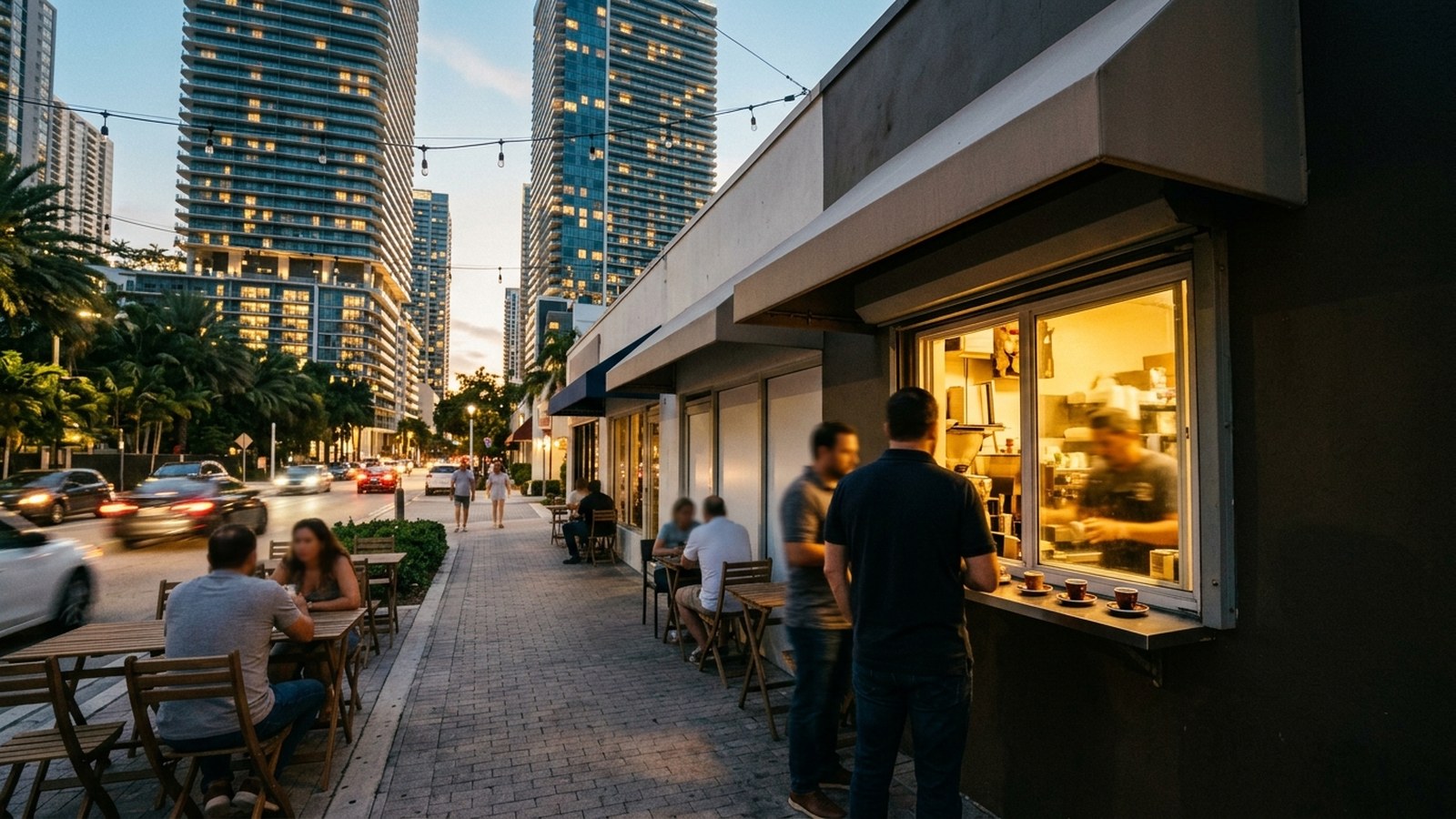
From Coffee Windows to Culinary Towers: The Business of Downtown Eating
The aroma of Cuban coffee and the buzz of international kitchens define the business of eating in downtown Miami, a culinary journey that mirrors the urban core's rapid transformation. This vibrant scene serves a diverse population, from long-time residents to new arrivals, reflecting downtown's economic and cultural dynamism.
Downtown Miami's culinary landscape is a vivid tapestry, reflecting the city's dynamic growth from its foundational Cuban coffee traditions to the global gastronomic offerings of Brickell's evolving skyline. This vibrant ecosystem of eateries, coffee shops, and high-end restaurants is not just about sustenance; it is a critical component of downtown's business environment, a magnet for residents and visitors, and a testament to the area's ongoing 'Manhattanization.'
The daily rhythm of downtown life is inextricably linked to its food establishments. From the early morning rush for a cafecito to the bustling lunch hour and the sophisticated dinner reservations, every meal underscores the economic activity and cultural diversity that defines Miami's urban core. The evolution of downtown's dining scene mirrors its vertical development and population influx, demanding a constant adaptation and expansion of culinary options to serve a growing, varied audience.
The Enduring Legacy of Coffee and Comfort
Even as glass towers rise, the enduring tradition of the Cuban coffee window, or ventanita, remains a cornerstone of downtown life. These unassuming counters, often found integrated into larger establishments or as standalone fixtures in the Central Business District, offer quick, strong coffee and Cuban pastries that fuel thousands of office workers and residents daily. They represent efficiency, community, and a taste of Miami's heritage, providing a vital service that transcends mere transaction; they are social hubs where quick conversations unfold and the day begins.
Beyond the ventanitas, a scattering of long-standing diners and casual lunch spots continue to thrive. These establishments often cater to a consistent clientele, offering classic American fare or straightforward Latin American comfort food. Their continued presence alongside newer, trendier venues speaks to the demand for accessible, familiar options that form the bedrock of downtown's working life. These businesses are essential anchors, providing a sense of continuity amidst rapid change and serving as crucial meeting points for the business community.
Brickell's Culinary Transformation: A Restaurant Row Emerges
Walk through Brickell today, and it is clear that the district has become a bona fide restaurant row, drawing a sophisticated crowd with its concentration of high-end, diverse culinary options. This transformation is deeply tied to the explosion of residential and commercial development in the area, creating a dense population center with significant disposable income and a taste for global cuisines.
Mega-projects like Brickell City Centre and mixed-use complexes such as Mary Brickell Village have served as catalysts, providing prime real estate for upscale restaurants, cafes, and bars. Here, one can find everything from renowned steakhouses to authentic Japanese izakayas, innovative Peruvian cevicherias, and contemporary Italian kitchens. This concentration of dining choices not only caters to the local workforce and residents but also positions Brickell as a destination for culinary tourism, further solidifying downtown Miami's reputation as a global city.
Expanding Horizons: New Flavors Across Downtown
The culinary expansion is not confined to Brickell. Across other downtown neighborhoods, new dining concepts are emerging and diversifying the landscape. In the Arts & Entertainment District, as residential towers fill, new eateries are sprouting up, often with a focus on artisanal ingredients or unique gastronomic experiences designed to appeal to a younger, culturally-aware demographic.
Edgewater, another district experiencing significant growth, is seeing a similar influx of independent restaurants and cafes, adding to its neighborhood feel. Even within the historical confines of the Central Business District, food halls and modern fast-casual concepts are finding success, providing varied and efficient options for the daytime population and evening residents. These new ventures reflect a broader trend: as downtown's population becomes more diverse and discerning, so too must its food offerings, constantly evolving to meet contemporary tastes and lifestyles.
The business of eating in downtown Miami is a dynamic reflection of the city's growth, showcasing a blend of cherished traditions and exciting innovations. From the enduring charm of the Cuban coffee window to the international flair of Brickell's restaurant towers, these establishments are more than just places to eat; they are vital components of the urban fabric, fostering community, driving economic activity, and enriching the daily lives of all who live, work, and visit downtown. This culinary journey ensures that as downtown Miami continues to grow, its tables will always be set for new experiences.
